Travelers booking flights for Thanksgiving and Christmas are paying markedly more than a year ago, as a record run-up in the price of jet fuel works its way into ticket prices across the U.S. airline industry.
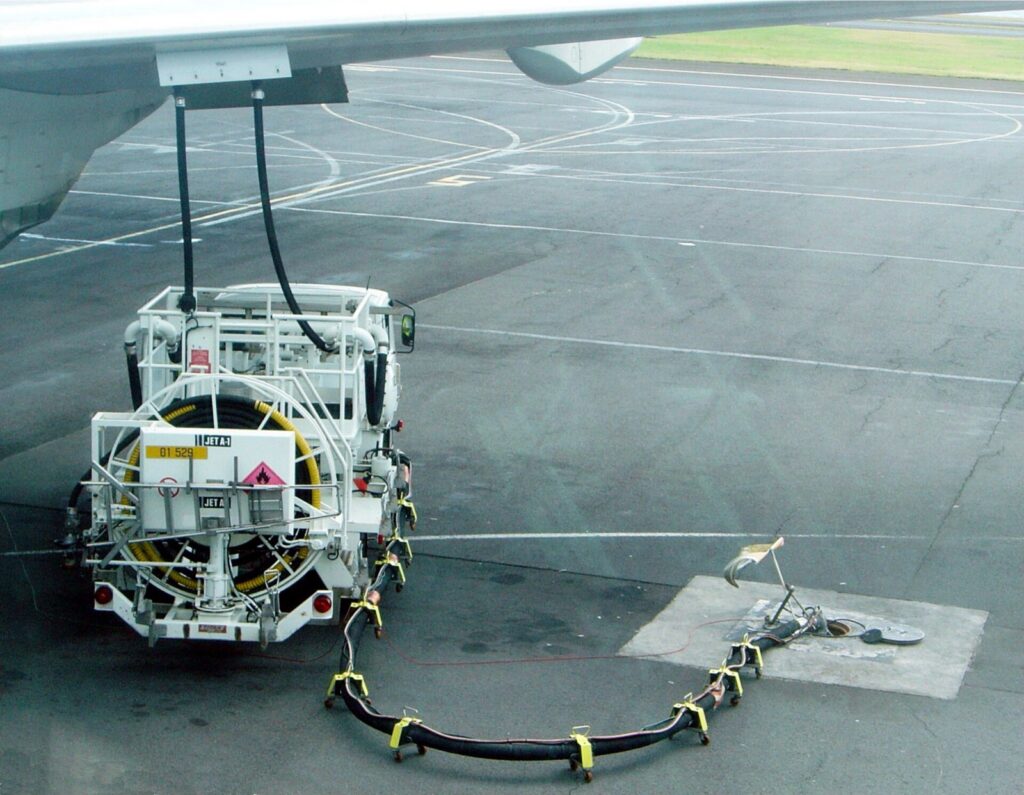
The average price of jet fuel in the United States reached $4.90 a gallon on Thursday, October 22, according to the price-tracking firm Argus, as reported by NPR. That was the highest single-day average the firm has ever recorded and more than double the level of a year earlier.
Fuel is one of the largest costs for any airline, and carriers have been raising fares to cover it. Thanksgiving airfares are up about 30% from last year, and Christmas tickets are up more than 20%, according to Hayley Berg, lead economist at the travel booking company Hopper.
“Airfares right now are at what we see as a 10-year high because of the high cost of jet fuel,” Berg told NPR. “Airlines have to pass on these super high jet fuel prices in the form of higher fares to consumers.”
Fuel costs climbing since the Iran war
Fuel prices have surged since the Iran war began in February, CNBC reported, and the effective closure of the Strait of Hormuz has pushed up the cost of crude oil and refined products such as jet fuel, according to Euronews. In Europe and the Commonwealth of Independent States, jet fuel averaged $207.61 a barrel in the week ending October 16, up almost 128% from a year earlier, according to the International Air Transport Association’s fuel monitor.
The latest consumer price data for September showed airfares more than 23% higher than a year before, CNBC noted.
Airlines say demand is holding
So far, U.S. carriers say passengers are still buying. Delta Air Lines cut its 2026 profit outlook when it reported third-quarter results on October 9, citing a roughly $6 billion increase in fuel costs this year, according to CNBC. The airline now expects full-year adjusted earnings of $5.10 to $5.60 a share, down from a July forecast of $6.50 to $7.50.
Even so, Delta chief executive Ed Bastian said customers have kept booking as fares climbed. “The consumer response continues to be quite strong. We’re seeing it across all channels, all cabins of service, all geographies, business, leisure,” he told CNBC. Delta forecast a 20% rise in fourth-quarter revenue from a year earlier.
Chris Sununu, who leads the industry trade group Airlines for America, said carriers are absorbing much of the increase. “The airlines themselves are eating most of that cost,” he said in a CNBC interview cited by NPR. “And some of it unfortunately has to be passed on to the customer and so you see that 20 to 30 percent increase as we go into the holidays.”
Travelers adjust plans
Berg said holiday trips tend to be “sticky,” meaning most people keep traditional plans even when prices rise. Still, many are shopping harder for deals and booking earlier than usual. Hopper saw an increase in customers booking holiday travel as early as September, she said.
Some travelers told NPR they would drive instead. Others said they planned to pay the higher fares anyway. NPR reported that the U.S. may fare somewhat better than Europe because it has more oil production and refining capacity, though higher fuel costs are still weighing on American carriers.
Europe braces for bigger increases
In Europe, Ryanair chief executive Michael O’Leary warned at a press conference in Brussels on October 20 that fares could climb sharply in 2027. “You’re going to see airfares rise next year in Europe, I think by 10, 15, maybe 20%,” he said, according to Euronews.
O’Leary said many European airlines, including Ryanair, have fuel hedges that protect them through 2026 but much less coverage beginning in April 2027. “We’re 85% unhedged next year, and most of the other European airlines are in a similar position,” he said. He also pointed to reduced seat capacity next year because of bankruptcies and takeovers in European aviation.
Berg said that in a typical year she spends mid-October urging travelers to book holiday flights by the end of the month. “But we actually saw an increase in customers booking holiday travel in September already,” she said.