
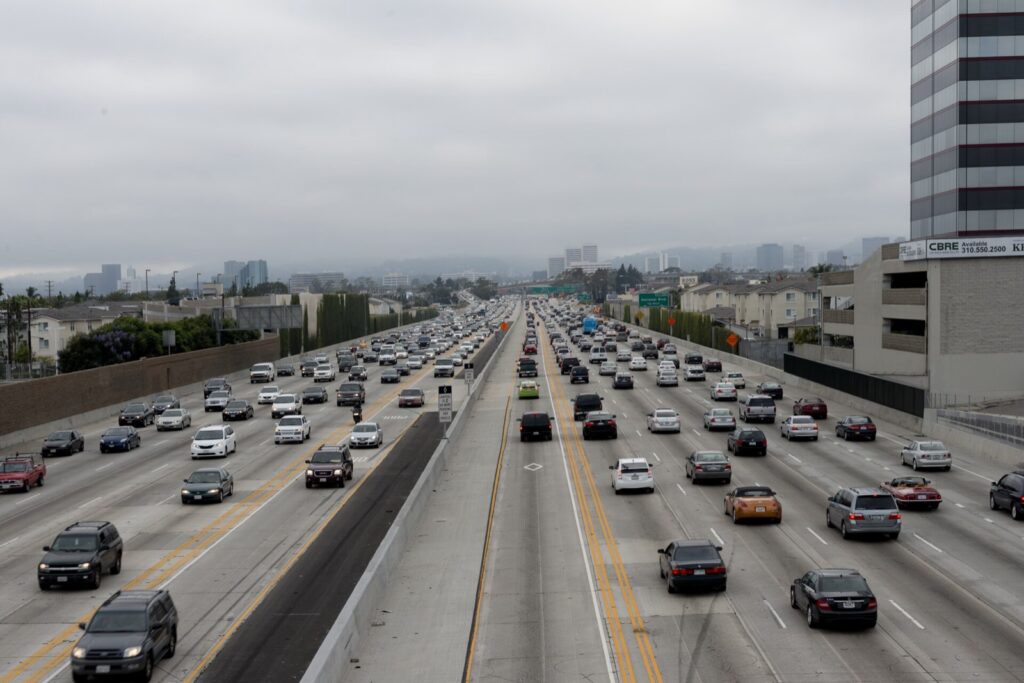
The Trump administration on Monday finalized a rollback of federal fuel economy requirements for new cars and light trucks, sharply lowering the efficiency targets automakers will have to meet by the end of the decade.
Under the revised Corporate Average Fuel Economy, or CAFE, standards issued by the National Highway Traffic Safety Administration, carmakers will need to improve the fuel efficiency of their new passenger car and truck fleets by up to 1% a year. That works out to an industrywide average of roughly 34.9 miles per gallon in model year 2031. The rules adopted under President Joe Biden had called for 2% annual gains and a projected average of 50.4 miles per gallon by the same year.
The case for the change
Administration officials framed the move as a way to make cars cheaper. They argue that the technology needed to meet tougher mileage rules has driven up vehicle prices, and they estimate the new standards will cut about $1,300 from the sticker price of a new vehicle.
“This administration is delivering relief to families and reviving the beating heart of American manufacturing,” Transportation Secretary Sean Duffy said. In another statement, Duffy said the administration had “finally ended the illegal mandate that forced automakers to produce more expensive electric vehicles that American families didn’t want.”
No federal rule has required companies to sell electric vehicles. The phrase refers to the Biden administration’s goal of having half of all new vehicle sales be electric by 2030, The Associated Press noted.
President Donald Trump previewed the change over the weekend on Truth Social, writing that the standards “will take the waste out of building cars in America” and would mean “LOWER PRICES, saving families thousands on a new, beautiful, and safe car.”
The final rule also eliminates a system that let automakers buy credits from electric vehicle makers to offset sales of less efficient models, a feature Republicans had long criticized. The CAFE standards had already lost much of their force last year, when the One Big Beautiful Bill Act reduced the penalty for missing them to zero. The White House proposed scaling the targets back in December, when regulators projected a 2031 average of about 34.5 miles per gallon.
Industry applauds, critics warn of costs
Automakers welcomed the decision. “NHTSA made the right call to better align fuel economy standards with the law and current market conditions,” said John Bozzella, president and CEO of the Alliance for Automotive Innovation, whose members include Ford, General Motors and Stellantis. He called the final rule “an appropriate course correction.”
A Ford spokesperson thanked Duffy for working “to align regulations with market realities.” Stellantis said the rules would let it offer customers a range of vehicles and powertrains, and noted it plans to invest more than $13 billion in U.S. manufacturing over the next four years, NPR reported.
Environmental groups said the rollback will increase gasoline use and pollution. “Trump is tanking sensible mileage standards at the worst possible time for consumers, who’re getting hit with sky-high prices at the pump,” said Dan Becker of the Center for Biological Diversity. Katherine García of the Sierra Club said her organization would fight the rule, warning that less efficient cars mean “more gas burned, spending more at the pump, and dirtier air in our communities.”
Fuel prices are elevated because the war with Iran has disrupted global oil flows. AAA put the national average for regular gasoline at $4.47 on Sunday, up from $4.09 a month earlier. Diesel was hovering near $6.50 a gallon, NPR reported. The average new vehicle sold for $50,089 in August, according to Kelley Blue Book.
Some economists questioned the affordability argument. Sue Helper, who studies the auto industry at Case Western Reserve University, told NPR that rising car prices have more to do with bigger vehicles, tariffs, supply chain problems and added features than with mileage rules. She warned that weaker standards could leave U.S. carmakers less competitive in global markets that are moving toward electric vehicles.
When the Biden-era standards were adopted in 2024, NHTSA estimated they would prevent 14 billion gallons of gasoline from being burned by 2050. Fuel economy standards date to the 1970s energy crisis, when Congress created them to reduce U.S. dependence on imported oil. The new rule could face legal challenges, and a future administration could restore stricter targets.